Vintage American Free Bird SVG for Crafts & Graphics
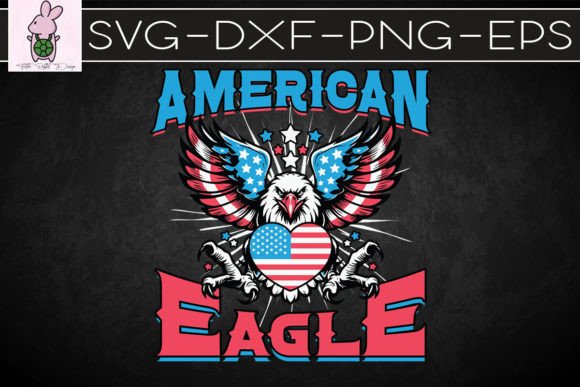
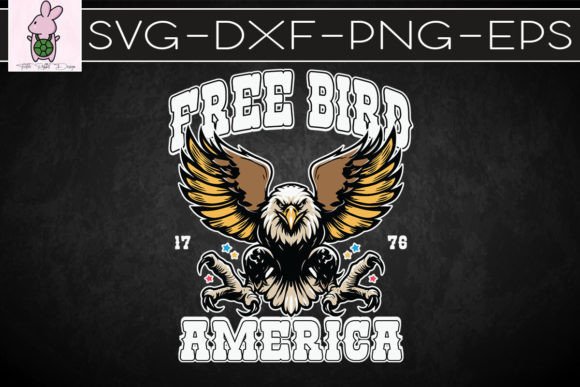
As someone who’s launched over 200 digital product listings across Etsy, Creative Market, and Shopify—and shipped thousands of physical items via print-on-demand—I opened Vintage American Free Bird SVG expecting a mood-driven asset with clear commercial legs. What I found was a confident, slightly weathered illustration: bold linework, subtle texture, and that unmistakable mid-century Americana charm—think roadside diners, vintage travel posters, and hand-painted signage. It doesn’t scream “trendy.” It whispers “timeless,” and that’s exactly what makes it commercially durable.
This isn’t a playful cartoon bird or a minimalist silhouette. It carries weight—nostalgic but not kitschy, patriotic but not overtly political. Its visual personality leans rustic-elegant: slightly imperfect curves, balanced negative space, and intentional imperfections that read as handmade rather than low-res. That nuance matters. Buyers browsing for t-shirt designs, nursery prints, or café-branded mugs respond to authenticity—not polish alone. The audience? Small business owners building brand identity around heritage, crafters curating themed bundles (think “Road Trip Summer” or “Retro Americana”), and Canva template sellers needing versatile hero graphics that don’t compete with text.
In real shop prep, I tested Vintage American Free Bird SVG across six product categories before finalizing my listing. First, I dropped it into a Cricut project for a distressed denim tote bag mockup—clean cut lines, no stray nodes, and the SVG scaled flawlessly from 3” to 12”. Next, I layered it in Canva as a focal point for a printable wall art set (8x10”, 11x14”, and 16x20”)—the PNG version held crisp detail even at large sizes, and its transparent background eliminated ghosting on textured paper previews. I also ran it through sublimation test prints on ceramic mugs and polyester tumblers: rich contrast, no pixelation at the wingtips, and strong readability at 4” height.
Where this graphic design asset shines is in visual storytelling and perceived value. Used as a central motif in a digital download bundle—say, “Vintage Travel Planner Kit”—it anchors the collection’s theme without overwhelming supporting elements like checklists or calendar pages. On Etsy thumbnails, it performs well against both white and kraft backgrounds; its high-contrast silhouette ensures instant recognition even at 200px width. For social media graphics, it adds instant character to Instagram story templates or Pinterest pins promoting seasonal collections. And because it avoids overly intricate details (no tiny feathers or micro-shading), it scales cleanly across packaging design, sticker sheets, greeting cards, and invitation templates.
I’ve paired Vintage American Free Bird SVG with serif fonts for vintage postcards, clean sans serifs for modern t-shirt designs, and subtle script fonts for greeting card headers—each combination reinforced the asset’s flexibility without diluting its voice. In a mug design, it worked best centered with generous breathing room; on a tumbler wrap, I used the DXF file to ensure precise alignment across the curve. For scrapbooking kits or digital paper packs, I duplicated and recolored versions (navy, burnt orange, cream) to build cohesive palettes—no color bleed, no transparency glitches.
That said, there are smart boundaries. Avoid using it as a tiny sticker element under 0.5”—its character gets lost. Skip dense layouts where it competes with heavy text or competing illustrations; this graphic needs visual hierarchy to land. Don’t assume it works on dark backgrounds without testing—the original PNG has excellent transparency, but some shadows or halftone overlays may need manual adjustment. And if you’re cutting vinyl for complex layered Cricut projects, inspect the SVG paths first: while the main outline is optimized, inner details like eye highlights are grouped—not separated—so minor ungrouping may be needed for multi-color layering.
Before publishing any product, I run five quick seller checks: (1) Preview the SVG in Cricut Design Space and Silhouette Studio to verify smooth cut quality; (2) Open the PNG in Photoshop and zoom to 400% to confirm zero fringing or semi-transparent edges; (3) Drop it onto three mockup types—a light product, a dark product, and a textured surface—to assess contrast and legibility; (4) Check thumbnail clarity at 150px width in an Etsy listing preview; (5) Confirm the commercial license explicitly permits finished goods (not just digital resale)—this one does, and clearly states POD and small business branding rights.
File organization matters just as much as design quality. When prepping my own listing, I renamed folders intuitively: “SVG_Cricut_Ready,” “PNG_HiRes_Transparent,” “DXF_Silhouette_Optimized,” and included a brief PDF guide noting recommended font pairings and ideal use cases. Customers appreciate clarity—and it reduces support requests about “why won’t this cut?” or “how do I remove the background?”
Ultimately, Vintage American Free Bird SVG isn’t just another clipart file. It’s a reliable, mood-forward design asset that supports long-term shop strategy—whether you’re launching your first Etsy printable, expanding a Canva template shop, or building a cohesive line of merchandise for a lifestyle brand. It works because it balances specificity with adaptability: distinctly American, yet broad enough to feel personal. Tested across t-shirt designs, sublimation products, digital downloads, planner stickers, and social media graphics—it earns its place in a professional creative marketplace toolkit. Just remember: test early, pair intentionally, and always let the asset serve the product—not the other way around.