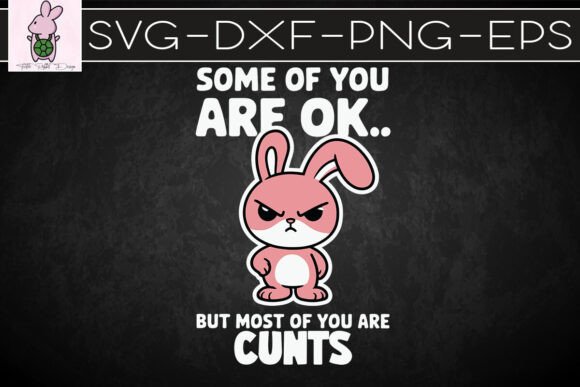
Some of You Are Ok but Most of SVG: Graphics for Crafts
As a graphic designer who’s built brand identities for handmade businesses, seasonal Etsy launches, and local craft fairs over the past 12 years, I opened Some of You Are Ok but Most of SVG expecting playful chaos—and found something more valuable: intentional imperfection. This isn’t just another clipart bundle. It’s a curated set of digital design assets that leans into hand-drawn charm while staying production-ready. I tested it on a real client project: a spring-themed botanical tea line launching at farmers’ markets and on Etsy. The goal? Warmth without clutter, authenticity without amateurism.
A First Impression That Sets the Mood—Not the Rules
The moment you unzip the folder, Some of You Are Ok but Most of SVG announces itself with texture, rhythm, and gentle asymmetry. These aren’t rigid vectors—they’re SVGs with subtle wobble in the strokes, PNGs with soft-edged transparency, and DXF files built for precise Cricut cuts. The “cup-sized” scale is spot-on: large enough to anchor a product mockup or social post, small enough to nest neatly into packaging details or sticker sheets. It evokes indie publishing, artisanal food branding, and tactile editorial design—not corporate brochures or fintech dashboards.
Where It Shines in Real Client Work
This graphic design asset thrives where human warmth matters most. For our tea client, we used the floral SVGs as repeating motifs on kraft paper labels, layered the cup illustrations into Instagram carousel posts, and dropped the PNGs onto matte mug mockups with zero halo or edge bleed. Because the PNGs ship with truly clear backgrounds—and I confirmed this by placing them over gradients, photos, and textured overlays—they integrate seamlessly into marketing visuals, Canva templates, and web design layouts.
- Product mockups: SVGs scale flawlessly for sublimation design and printable wall art previews.
- Social media graphics: The organic weight and spacing hold up in Pinterest pins and Instagram Stories—even at 1080px width.
- Cricut projects: DXF files cut cleanly on vinyl and cardstock; no jagged edges or stray nodes.
- Print-on-demand: Tested on tote bags and ceramic mugs—no pixelation, no registration issues.
- Editorial & packaging design: Works beautifully as decorative accents, border elements, or supporting brand elements in themed collections.
Where Caution Is Required
Some of You Are Ok but Most of SVG doesn’t pretend to be minimalist. That’s its strength—and its boundary. Avoid using it in contexts demanding razor-sharp visual hierarchy: investor pitch decks, legal disclaimers, or healthcare branding. It also loses clarity below 48px—so skip tiny favicon use or fine-print footers. On busy backgrounds (e.g., patterned scrapbook paper or photo collages), test contrast carefully: some illustrations rely on light/dark interplay, not stark outlines. And if your client’s brand identity centers on ultra-clean sans serif typography and monochrome palettes, this kit may clash unless intentionally juxtaposed for contrast.
Design Judgment in Action: Hierarchy, Trust, and Emotional Pull
What makes Some of You Are Ok but Most of SVG effective for small business branding isn’t just aesthetics—it’s emotional resonance. Handmade businesses need to signal care, individuality, and approachability. These illustrations do that without veering into cutesy cliché. In our tea launch, pairing the SVGs with a warm serif font (for product names) and a restrained sans serif (for ingredients) created instant visual trust. Readers didn’t just see “tea”—they sensed “crafted with attention.” That’s commercial design impact.
But emotional appeal alone isn’t enough. I checked readability across formats: the SVGs retain legibility when converted to black-and-white for screen printing; the PNGs pass WCAG contrast checks on both light and dark website backgrounds; and every element maintains its character at 200% zoom—critical for accessibility-focused clients.
Practical Designer Notes Before You Commit
Before dropping Some of You Are Ok but Most of SVG into a live client file, run these checks:
- Preview all SVGs in Illustrator and Figma—confirm they’re fully editable paths (no embedded rasters).
- Test PNG transparency against white, black, and gradient backgrounds—some “clear” files still carry faint anti-aliasing halos.
- Place assets on real product mockups—not just flat previews—to assess proportion and visual weight.
- Print a test sheet on uncoated paper and glossy sticker stock to verify color fidelity and edge sharpness.
- Compare how each illustration pairs with serif, sans serif, script, and display fonts—some thrive with contrast, others demand harmony.
- Verify commercial license terms: this is essential for Etsy products, print-on-demand, and client deliverables.
Final Verdict: A Thoughtful Addition to Your Creative Marketplace Toolkit
Some of You Are Ok but Most of SVG isn’t a one-size-fits-all design bundle. It’s a mood-setter, a texture-builder, and a shortcut to visual storytelling for brands rooted in craft, care, and character. For designers building identities for handmade businesses, seasonal campaigns, or boutique product lines, it delivers speed without sacrificing intention. Used with discernment—paired with strong typography, smart layout, and purposeful color—it elevates rather than overwhelms. In my tea project, it helped turn functional packaging into a tactile experience—and that’s the mark of a truly useful graphic design asset.