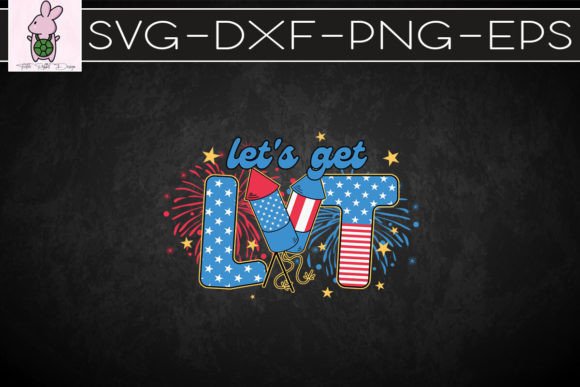
Let’s Get Lit 4th of July Firework SVG: Graphics for Crafts & Celebration
As a blog designer who’s built over 200 editorial sites—and shipped thousands of digital guides, newsletter banners, and affiliate content visuals—I opened Let’s Get Lit 4th of July Firework SVG expecting festive flair. What I found was something sharper: a versatile, production-ready graphic design asset that balances bold celebration with clean editorial utility. It’s not just decorative—it’s functional visual shorthand for summer energy, patriotism, and joyful urgency.
A First Impression That Builds Reader Trust
The moment you unzip the folder, you’re greeted with layered SVG, high-res PNGs (transparent background, no jagged edges), and DXF files—all optimized for immediate use in Canva, Adobe Illustrator, Cricut Design Space, and Figma. No hunting for missing fonts or broken vectors. That immediacy signals professionalism to *you*, the publisher—and it translates directly to reader trust. When your July 4th roundup features crisp, scalable fireworks as a featured image, readers subconsciously register your site as polished, timely, and detail-oriented.
This asset leans into a modern, lifestyle-meets-celebration mood: energetic but not chaotic, patriotic without cliché, playful yet refined. It suits food bloggers launching a “Backyard BBQ Guide,” educators building a summer-themed digital worksheet, small business owners designing a limited-time sale banner, or affiliate marketers promoting grilling gear, party supplies, or outdoor décor. It’s not overly feminine, not overly technical—it’s broadly inclusive, seasonally resonant, and instantly legible at a glance.
Where This Graphic Design Asset Earns Its Keep
In real publishing workflows, Let’s Get Lit 4th of July Firework SVG shines where visual hierarchy and emotional resonance matter most:
- Blog featured images—layered behind bold headlines like “12 Last-Minute 4th of July Ideas” for instant seasonal context
- Pinterest pins—scaled to 1000×1500px with ample negative space for text overlay and brand watermarking
- Digital guides & lead magnets—used as section dividers, cover accents, or corner embellishments in Canva templates
- Newsletter headers—a subtle animated SVG version (exported from the vector) adds motion without bloating load time
- Category thumbnails—paired with minimalist typography to signal “Summer Content” at a glance
- Social media graphics—cropped tightly for Instagram Stories or stretched horizontally for Facebook cover photos
- Printable designs—the DXF file cuts cleanly on vinyl or cardstock for DIY party signage or craft kits
Each use strengthens your brand identity—not by shouting “look at me,” but by reinforcing consistency, timing, and attention to detail. A well-placed firework graphic tells readers, “This content is current, curated, and made for *this* moment.” That perception boosts click-through potential, especially in crowded feeds or email inboxes.
Where to Deploy With Intention—Not Assumption
Like any strong editorial element, Let’s Get Lit 4th of July Firework SVG works best when matched to context—not slapped onto every surface. It thrives in hero images, article thumbnails, and Pinterest pins where its energy commands attention. But avoid using it in:
- Small mobile thumbnails (details blur; impact flattens)
- Text-dense infographics (distracts from data flow)
- Low-contrast backgrounds (e.g., light yellow or peach—test readability rigorously)
- Buses layouts with competing patterns or multiple icons
- Serious professional niches (e.g., legal resources, financial planning, medical content)
- Websites built on strict minimalism (think monochrome serif typography + ample whitespace)
If your brand voice is calm, clinical, or highly technical, this graphic design asset may feel tonally dissonant—even if visually flawless. Use it where celebration, energy, and seasonal relevance align with your audience’s expectations.
Publisher Notes You Can’t Skip
Before publishing, run these checks—every time:
- Preview the SVG inside your actual blog layout (not just in design software). Does it scale cleanly in your theme’s featured image container?
- Test contrast: place white headline text over the brightest firework burst—does it remain readable on desktop *and* mobile?
- Check thumbnail rendering: shrink it to 300px wide. Do shapes hold? Does the central motif still read as “fireworks”?
- Try it beside your core font pairings—serif (e.g., Merriweather), sans (e.g., Inter), script (e.g., Pacifico), and display (e.g., Bungee). Does it complement—or compete?
- Run PNGs through Squoosh or ShortPixel. Aim for under 250KB without visible artifacting.
- Verify commercial license terms—especially for affiliate marketing pages, paid digital products, or client-facing websites.
Remember: this isn’t just a “pretty clipart” download. It’s a creative marketplace asset built for commercial design, and its value multiplies when treated as part of your editorial infrastructure—not just a one-off decoration.
Final Thought: Visuals Are Your Silent Editorial Team
In content marketing, every pixel supports (or undermines) your message. Let’s Get Lit 4th of July Firework SVG delivers what seasoned publishers need: speed without sacrifice, celebration without clutter, and scalability without compromise. Whether you’re crafting a summer-themed digital guide, upgrading your blog’s seasonal category visuals, or building a Canva template library for clients, this graphic design asset earns its place—not as filler, but as functional, trustworthy, and quietly strategic. For crafts-focused creators, lifestyle bloggers, and small business branding teams, it’s more than a firework. It’s a signal: your content is ready for the spotlight.