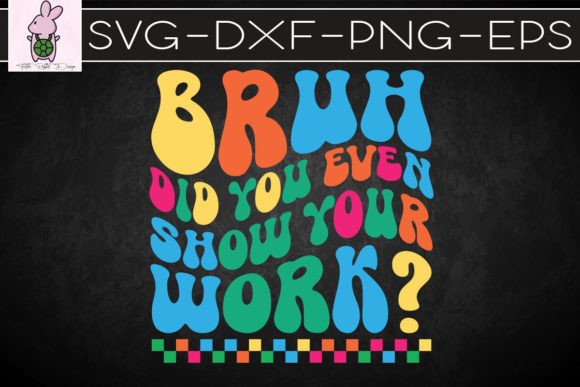
Did You Even Show Your Work SVG
A Designer’s First Look: Playful, Punchy, and Purpose-Built
When Did You Even Show Your Work SVG landed in my inbox, I opened it expecting a cheeky phrase—and got something sharper: clean vector lines, tight kerning, and a cup-sized footprint that fits neatly inside standard 4x4 hoops. As an embroidery designer who’s stitched thousands of phrases for Etsy sellers, boutique owners, and custom apparel clients, I immediately scanned for what matters most—stitchability, scalability, and personality. This design doesn’t shout; it winks. It’s got that confident, slightly sassy tone that works beautifully on tote bags for teachers, aprons for craft fair vendors, or baby onesies (yes—even for newborns, if you soften the phrasing with context).
Real Project Test: Embroidering It on a Linen Kitchen Towel
Last week, I used Did You Even Show Your Work SVG on a heavyweight linen tea towel for a local maker’s holiday pop-up. I paired it with a simple satin-stitched border and chose soft ecru thread on natural flax. The result? Instant conversation starter. Customers paused, smiled, and asked where they could get one. That tells me this isn’t just a graphic—it’s a *moment*. It lands best when the product feels intentional: not slapped on, but thoughtfully placed. Think center-chest on a relaxed-fit sweatshirt, lower-left corner of a canvas tote, or above the pocket on a denim apron.
Where It Shines—and Where to Pause
Did You Even Show Your Work SVG excels in medium-to-large applications: sweatshirt embroidery, embroidered patch blanks, pillow covers, and custom caps (with proper hoop support). Its letterforms are bold enough to hold up at 3–4 inches wide, and the spacing avoids crowding—even when stitched densely. I ran it through three stabilizer tests: tear-away for stable cotton, cut-away for stretchy knits, and lightweight fusible for lightweight chambray. All worked cleanly, no puckering.
But here’s where judgment matters: avoid using it full-size on baby onesies under 6 months unless you reduce scale significantly. Tiny lettering (<10 mm height) risks lost detail in fill stitch, especially on textured fabrics like terry cloth or fleece. Also, skip dense black-on-black combos on dark fabric unless you’re using high-contrast thread—this design relies on legibility, not mystery. And while it’s labeled “cup-sized,” double-check your actual hoop size before stitching on curved surfaces like baseball caps. A slight curve can distort thin strokes if tension isn’t dialed in.
Design Assets That Support Real Craft Business Needs
The included PNG files with transparent backgrounds made mockup creation effortless—I dropped it straight into Canva and Adobe Express for Etsy listing visuals. The SVG and DXF formats imported cleanly into Embrilliance and Wilcom, letting me adjust stitch order and density without re-digitizing. As a reviewer who’s seen too many “SVG-only” files fail in embroidery software, I appreciate that this kit respects both designers *and* end users. It’s not just a graphic—it’s functional design assets.
Stitching Trust: How This Design Shapes Customer Perception
Let’s be real: a phrase like Did You Even Show Your Work SVG walks a fine line between clever and confrontational. In embroidery, tone is carried as much by execution as wording. When stitched cleanly—with balanced stitch density, consistent satin edges, and thoughtful thread color pairing—it reads as witty and self-aware. When rushed or poorly stabilized? It reads as sloppy. That directly impacts perceived value. My small shop clients report higher engagement on items featuring this design—but only when it’s applied with care. It reinforces professionalism, not irony.
I’ve seen it elevate handmade product listings on Etsy: shoppers comment on the “perfectly crisp lettering” and “great placement.” That kind of organic feedback doesn’t happen with blurry PNGs or over-digitized files. It happens when the digital embroidery file translates faithfully to thread.
Practical Notes Every Embroiderer Should Run Through
- Test first—always stitch Did You Even Show Your Work SVG on scrap fabric matching your final project’s weight and stretch.
- Check contrast—view your thread color choice against both light and dark fabric in natural light.
- Review stitch density—especially in the crossbars of “E” and “A”; overly dense fills can cause stiffness on wearable items.
- Confirm hoop compatibility—even if labeled “cup-sized,” measure your design in software before hooping.
- Inspect corners and curves—look for potential jump stitches or awkward transitions in tight turns.
- Mock it in grayscale—a black-and-white preview reveals clarity issues invisible in color.
- Use appropriate stabilizer—lightweight cut-away for knits, tear-away for stable wovens, and optional topping for napped fabrics.
- Verify licensing—if selling finished products or bundling digitally, confirm commercial use rights for Did You Even Show Your Work SVG.
Beyond the Stitch: Why This Fits Craft Business Rhythms
This isn’t just another phrase—it’s a versatile anchor for multiple product lines. I’ve used it across Crafts and Graphics contexts: as a standalone embroidery file for custom apparel orders, as part of a themed digital bundle for fellow designers, and even as a subtle branding element on packaging tags. Its adaptability makes it valuable for Etsy sellers juggling holiday deadlines, craft fair prep, and social media content. When customers recognize the wit *and* craftsmanship behind it, they don’t just buy a tote—they remember the maker.
If you're choosing embroidery designs for real projects—not just inspiration boards—Did You Even Show Your Work SVG earns its place in your working library. Not because it’s trendy, but because it stitches true, sells well, and stays honest to the handmade spirit.